
The Soldiers on Wallabi Island
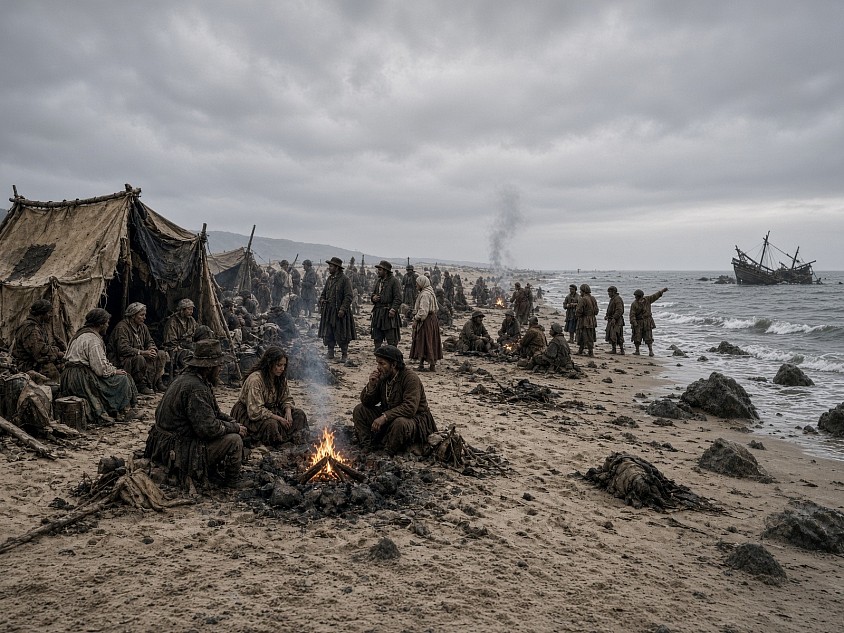
Six miles northwest of Beacon Island’s coral charnel house lies High Wallabi Island, a rugged landmass of rolling limestone ridges and dense coastal scrub where Jeronimus Cornelisz exiled Corporal Wiebbe Hayes and forty-seven unarmed soldiers to die of thirst. Refusing to perish for an apothecary’s ledger, Hayes leads his exhausted detachment into the island’s interior, breaking through solid limestone cap-rock with rusted crowbars to uncover three subterranean sinkholes brimming with sweet, ice-cold rainwater. With abundant native tammar wallabies, sea-birds, and shellfish to sustain them, Hayes establishes a disciplined, egalitarian camp and lights towering signal pyres to summon the boats for the women and children on Beacon Island. When no answering smoke rises across the channel—and two bloodied, half-drowned swimmers wash ashore at dawn bearing horrifying eyewitness accounts of Cornelisz’s massacres—the truth becomes unmistakable: the mutineers will soon cross the water to annihilate the remaining witnesses. Instantly transforming High Wallabi into a military fortress, Hayes and his forty-nine men build a makeshift charcoal forge, hammering iron barrel-hoops into razor-sharp short swords and tipping seasoned tea-tree poles with salvaged ship-bolts. Along the southeastern escarpment overlooking the sole reef passage, they haul tons of limestone into a fortified stone parapet flanked by camouflaged sangars and a sixty-foot timber watchtower. Drilled daily in disciplined phalanx formations behind solid stone, Wiebbe Hayes’s unbroken garrison stands ready to turn Cornelisz’s coming assault into a reckoning.